you are loved

Self Love in Yoga
Amber Connors | OCT 13, 2021
self love
self reflection
meditation
grounding yoga poses
6 Grounding Poses for Self-Love
What is self-love? It's a return to yourself. After all the energy we pour into giving to others, our work, our family, our friends - its remembering that we need to listen to and care for our own needs. If we are always giving to others without doing this, we will deplete our energy. Self-love continuously replenishes the well from which we give. It's important to tune into your own thoughts and body regularly, to ensure your health and happiness, bringing you closer to a regular experience of peace.
What are some examples of self-love? Self-love could be journaling, enjoying a cup of coffee on your deck or going for a walk in nature. It's something a little more elevated and special to you than visiting your regular hygiene and sleep. Self-love is something you do mindfully and use as a tool for introspection and a conversation with yourself. It's an audit of your thoughts and an observance of your breath. So much can be realized from auditing your thoughts and observing your breath. And the breath patterns we employ have a direct impact on the way we hold our posture, protect our heart, and approach our day.
Self-love is important now more than ever.
Now is the only moment in which you have the power to affect change. It seems like something simple but it can have a deep impact on your mood and happiness. No one can truly know your thoughts unless you tell them, and you cannot tell them if you haven't been able to fully process what they are and why they are there. Take the time to love yourself in this way - deep breathing, self-inquiry, and self-appreciation.
How can you start practicing self-love?
In addition to ideas mentioned above, yoga is a fabulous tool for uniting the breath and the mind through physical asanas. This 6-pose yoga sequence can take place at any time you are in the need of a little grounding, self-love.
6. VAJRASANA (THUNDERBOLT POSE)
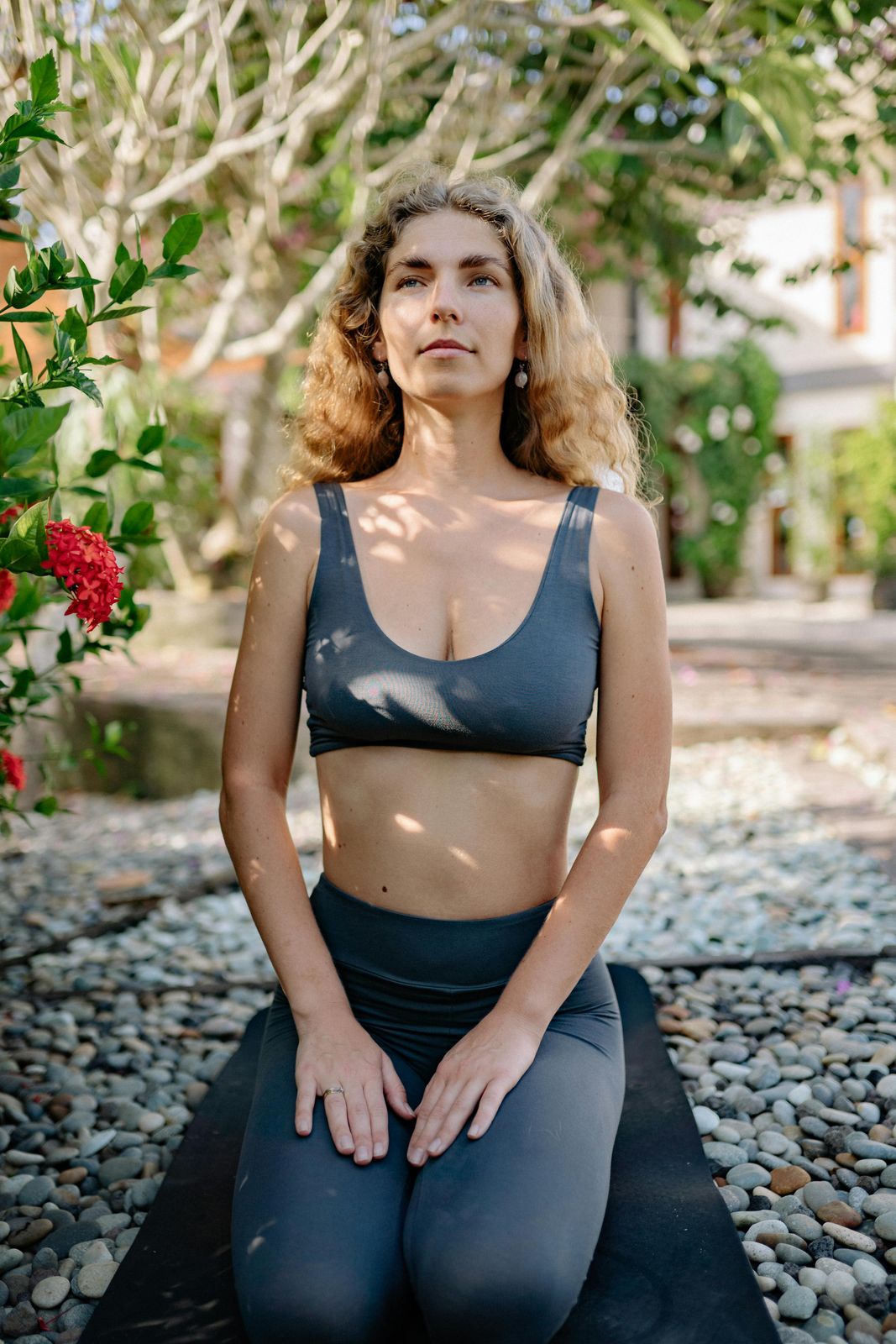
(hint: I recommend sitting on 2 blocks)
Sit with your knees parallel, either on your feet, or with two blocks centered between your ankles to add a little elevation. Press your shins and feet into the floor. After that, take any movements in the shoulder or upper body in this position that’s needed to free your spine and allow your breath to flow freely. Vajrasana is a relaxing pose for the whole body as well as stabilizing for the mind. The blood flow that is squeezed from the legs into the lower abdomen helps to aid in digestion and can be good for easing menstrual cramps as well. This is a great pose for meditation or contemplation. Yoga teaches us not to compare and to strive to see things for what they truly are without the imprint of memories. In addition, it gives permission to just BE in the present moment without worry pulling you elsewhere.
5. ANJALI MUDRA (PRAYER) EYES CLOSED. CHANT OM.

While sitting in vajrasana (or any comfortable seated position), press your hands together in anjali mudra (prayer position), relax the shoulders, and close your eyes. After that, turn your attention inward and chant the mantra OM.
Om is said to be the sound present at the start of the universe. In addition, it is said to be the internal sound of your heartbeat and a unifying force of all things.
Om represents the universal cycle of birth, life, death, and resolution.
Chanting Om is an easy way to quickly re-harmonize with one’s own internal source and therefore feel a state of peace. Listen for resolution and above all, feel the vibrations resonate throughout your body and within your heart.
4. BALASANA (CHILD’S POSE)
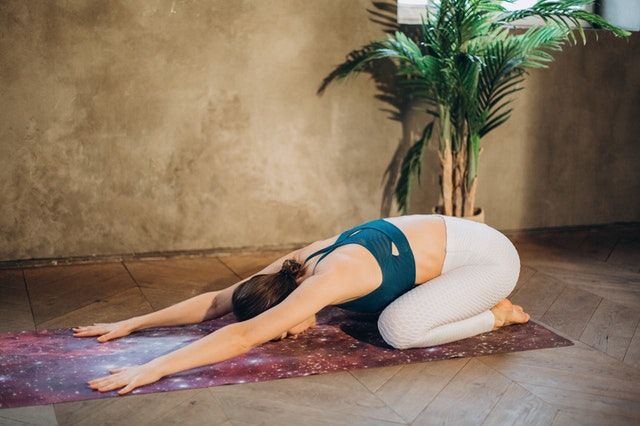
(hint: I recommend a block under the forehead)
Reach your hips back to sit on your feet and take the knees apart wide, toes together to touch. Allow the lungs to expand into the space between the knees. You may enjoy a block under the forehead or a bolster under the abdomen to help bring the ground up to you and support. Stretch your arms out long in front of you and breathe. Subsequently, envision the breath exiting and entering through the space of your back. With each breath, allow the spine to lengthen from the crown of the head to the tailbone. Allow gravity to bring you into the ground or the bolster, therefore supporting your relaxation.
3. VIPARITA KARINI (LEGS UP THE WALL)
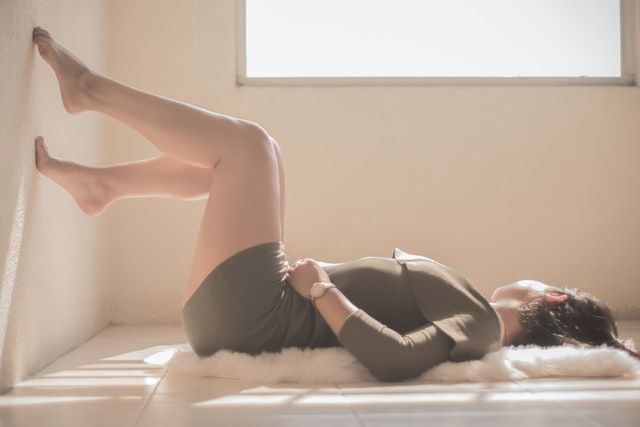
Viparita Karani is a great pose that offers benefits such as relieving headache, low back pain and calming the mind. Sit with your hips at or a little away from the wall. You can also rest the calves and feet up on the seat of a chair for support. Play with adding stacked folded blankets under the hips to find what feels comfortable for your body. Close your eyes or enjoy the eyes covered to block out the light and breathe. After that, relax the legs as much as possible and continuously redirect your focus on the pathway of the breath in the chest, inhale and exhale. Feel the ground underneath you to support you.
2. SAVASANA (CORPSE POSE)
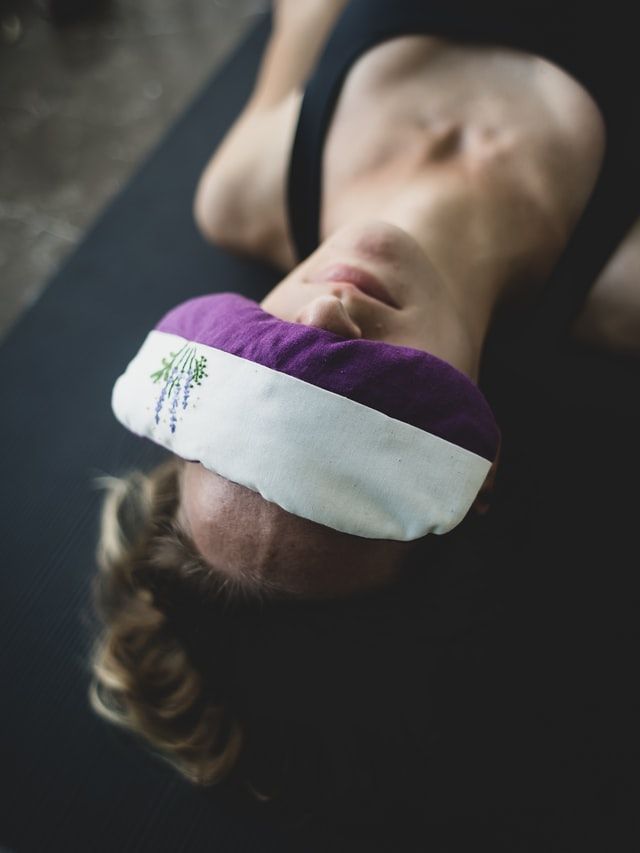
(hint: I recommend an eye pillow & blanket!)
After a few minutes in the previous pose, roll to your side and move any props out of your way. Outstretch the body the length of the yoga mat and settle into savasana (corpse pose). Savasana allows full body relaxation. As the body cools-down, it regenerates fresh, oxygenated blood and sends it to the exhausted muscles. Close your eyes and top them off with an eye pillow. Let your thoughts float by in your mind, like clouds in the sky, acknowledging but not dwelling on their presence. In other words, this is the moment to return yourself gratitude for taking time to nourish your body and mind. Enjoy a minimum of 10 minutes in this relaxing pose for full benefits to the nervous system.
1. RECALL AWARENESS. SIT IN GRATITUDE.
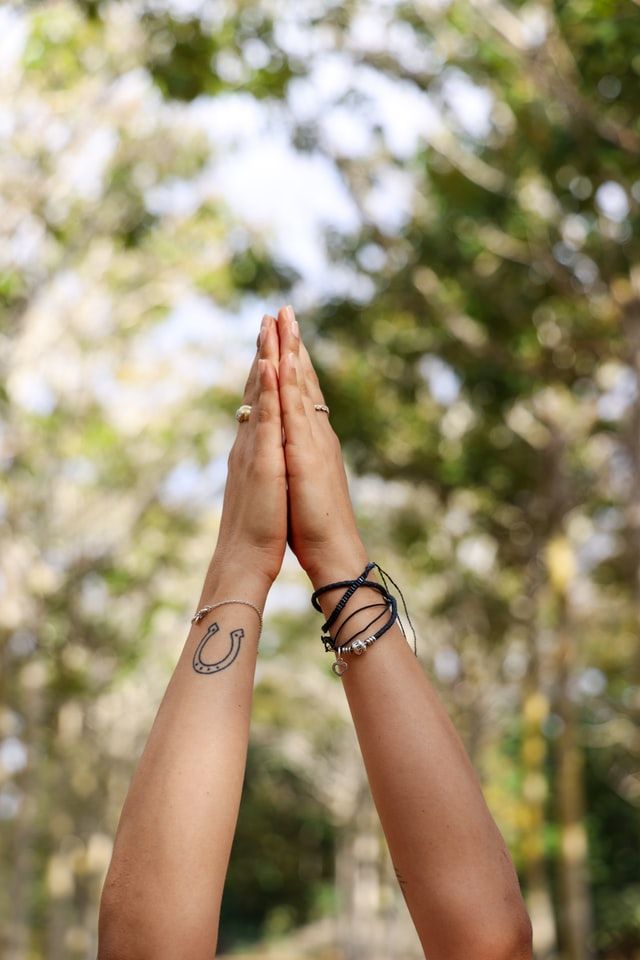
After a period of time in savasana, slowly recall awareness, and deepen the breath. Gently wiggle your fingers and toes. Roll to a fetal position on your side. Bring yourself up to sitting in a comfortable position and place your palms together at your heart's center (anjali mudra). Bow the head to the heart. Thank yourself for taking this time to connect with your internal divine source and experience gratitude.
In conclusion, realize that self-love is an ongoing practice and requires patience.
No need to constantly picture some future, perfect state-of-being because you are perfect as you are right now. Of course, there are times to strive for self-improvement. Also… you can have some patience if it takes longer than expected. Above all, there’s no reason not to love yourself right now.
New to yoga and don't know where to begin? Here are my tips for Starting a Home Yoga Practice.
Be well, dear friend and revisit this practice as often as you need and please share with anyone else you think would enjoy! Let me know which of the postures has benefitted you.
Wondering what props you need to get started with yoga, read here!
Amber Connors | OCT 13, 2021
Share this blog post

Amber Connors, Yoga + Lifestyle
 OfferingTree