you are loved

Restorative Yoga
Amber Connors | FEB 19, 2024
yoga props
yoga strap
restorative yoga
meditation
relaxation
active rest
yoga winchester va
yoga inwood wv
What is Restorative Yoga?
Are you curious about Restorative Yoga? Are you wondering why anyone would want to practice this type of yoga? Perhaps it has been recommended to you as a way to alleviate persistent tension or stress. If you have been asking "what is restorative yoga?" read on to find out about its benefits and how it can complement your overall wellness.
Restorative Yoga, an Overview
Restorative yoga is a practice of relaxation by way of comfortably laying in yoga asanas, supported with props (such as blankets, bolsters, yoga straps, eye pillows), encouraging your body’s own natural healing abilities.
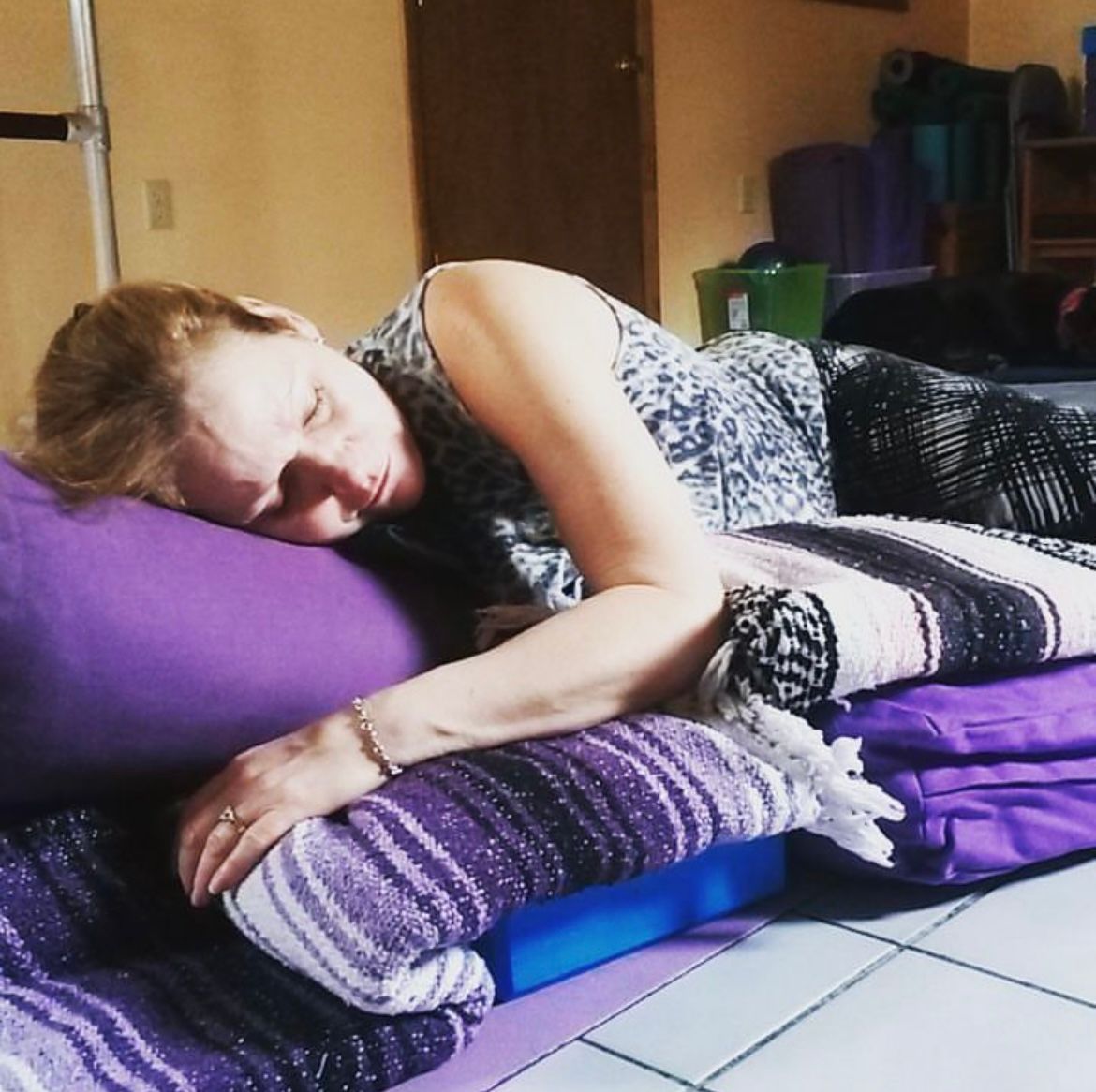
As the physical body feels wholly supported with the addition of props, it’s able to fully soften and relax. Depending on the cause of your tension, finding comfortable positioning and the skillful addition of props may relieve pain for you or create the necessary space to breathe more easefully, continuously allowing deeper relaxation and expanding your comfort.
What are the benefits of Restorative Yoga? How does it work?
Not only does relaxing in this manner feel ABSOLUTELY AMAZING, it has tremendous physical and mental health benefits. On a day to day basis - many of us are operating at our maximum energetic capacity. But as humans, we require the down time for necessary recovery, growth and healing.
Responding to the stress around us, many people are operating from a predominant sympathetic nervous system, or fight or flight mode. When we actually slow down and practice relaxing, it elicits the relaxation response. The relaxation response describes the nervous system transition away from sympathetic fight or flight mode, to a predominant parasympathetic nervous system, or rest and digest mode.
The ability of our nervous system to go fight or flight mode is useful during perceived threats or stressful situations to help us power through with adrenaline. However, many of us are unnecessarily operating from our fight or flight mode after relying on it for extended periods of time. So much so, that we have trouble turning it off and “downshifting” our nervous system so our body can relax when we would like to do so. Without the ability to relax, our body is unable to perform necessary processes for continued health such as digestion and cell repair.
Is Restorative Yoga sleeping?
It is not the same as sleeping, though it may appear to an onlooker - and honestly, if you do fall asleep it's okay too! (It means you truly needed the rest).
Who needs Restorative Yoga?
Humans need this practice for more optimal health and assisting with reducing our physical pain. Rest is necessary for healing from ailment, injury, or even progressive muscle gaining recovery. Restorative yoga is complementary to any movement practice. It is an extremely important practice for those who are experiencing feelings of overwhelm, anxiety, fatigue, or restlessness. By practicing down-regulating the nervous system to relax it will become easier to rest when the opportunity arises. This means you can more easily go to sleep at night if you know how to get yourself comfortable and breathe into relaxation.
Is Restorative Yoga for beginners?
You don’t need much previous knowledge of yoga to benefit from a restorative yoga class or session, so skill level is not really a concern. Do, of course, gain approval from your physician before engaging in any physical activity program.
If you are someone who is constantly active and rarely sits still, restorative yoga may feel like a challenge. This is all-the-more reason it can benefit you to embark on a practice. Restorative yoga goes hand in hand with meditation and is as much a physical as a mental practice. Hence its beneficial holistic effects to our overall health. With the guidance of a patient instructor, even those students finding restorative yoga challenging can benefit from its multitude of positive effects. They will eventually find more ease slipping into a state of relaxation by honing this skill.
Practice Restorative Yoga;
Let’s try a Restorative Yoga pose now; Supported Savasana.
Supported Savasana
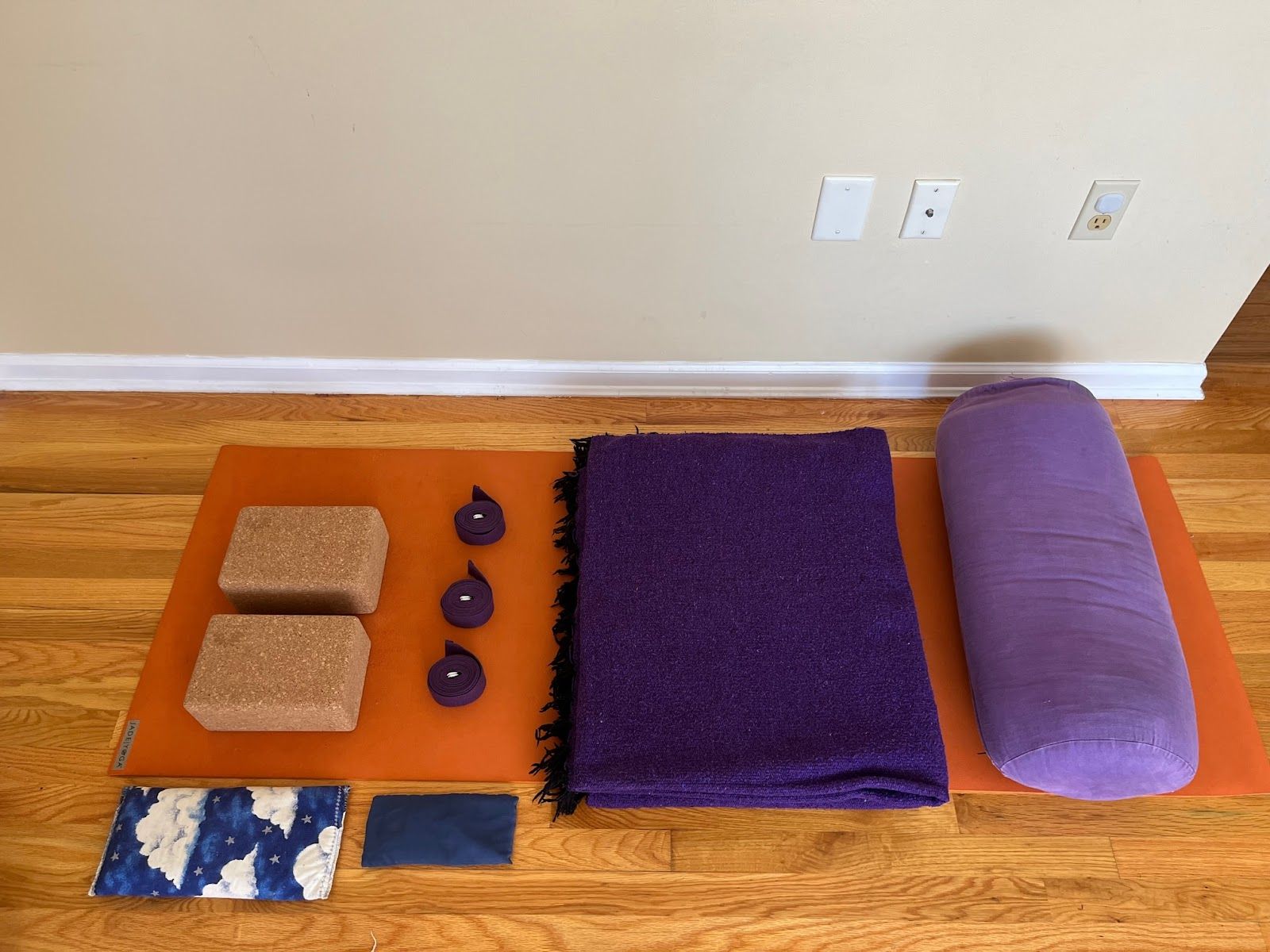
Props needed: yoga mat, bolster, 2 blocks, 2 blankets, eye pillow
The setup:
Fold your yoga blanket one time (fringe to fringe) and then once more so it covers a large area of the mat. I like to put the fringe down towards my feet. Then, roll the top of the blanket down slightly to make a neck roll cushion. Place your bolster and two yoga blocks near the bottom of the mat to support under your knees and feet.
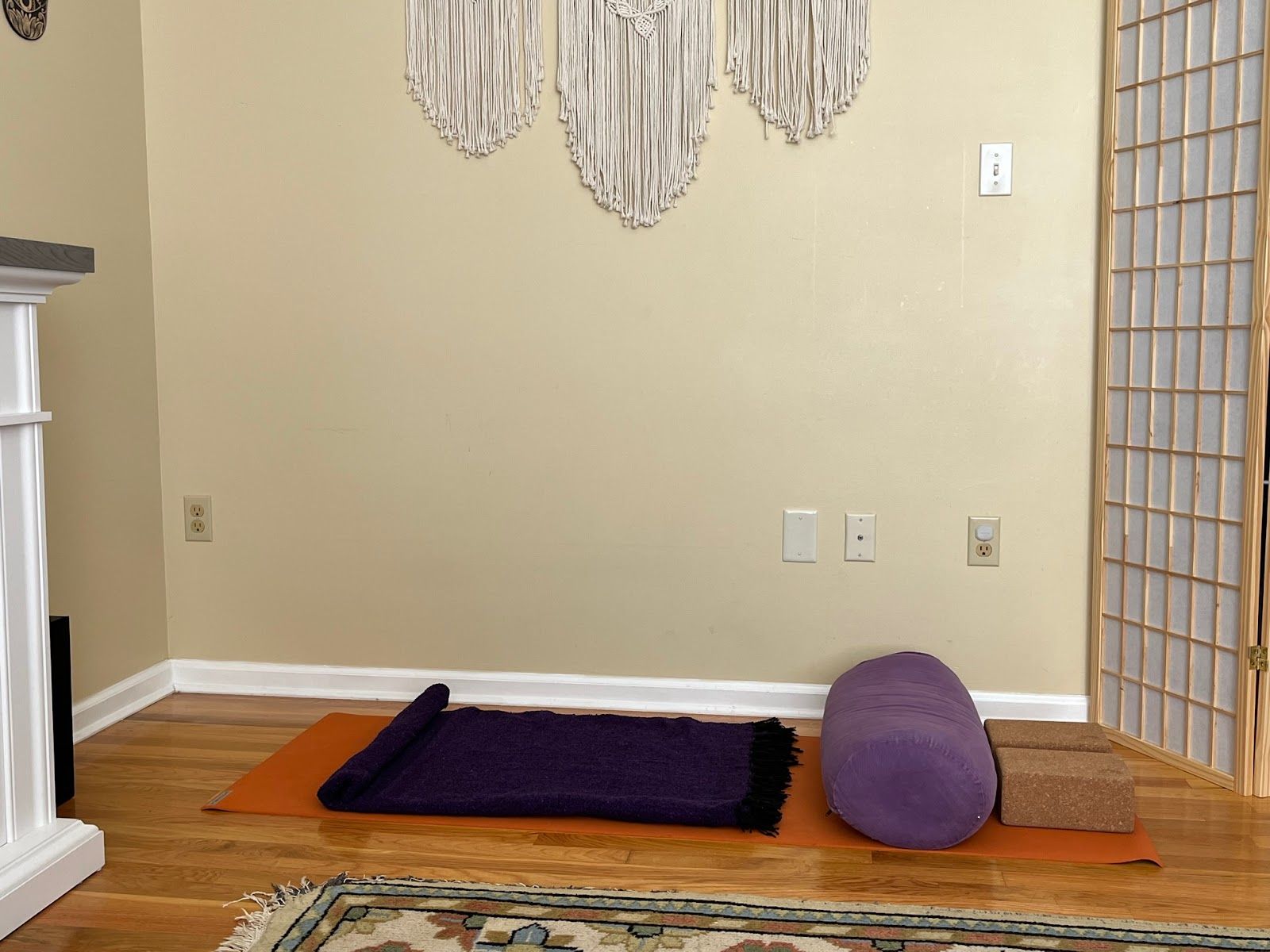
Adjust yourself as needed to find comfort with the neck roll, and optional eye pillow to help close the eyes, block out light, and turn your attention inward. The second blanket (not pictured) can drape overtop of you to keep you warm. If you cool easily, consider also wearing layers and socks to stay cozy and allow your complete relaxation.
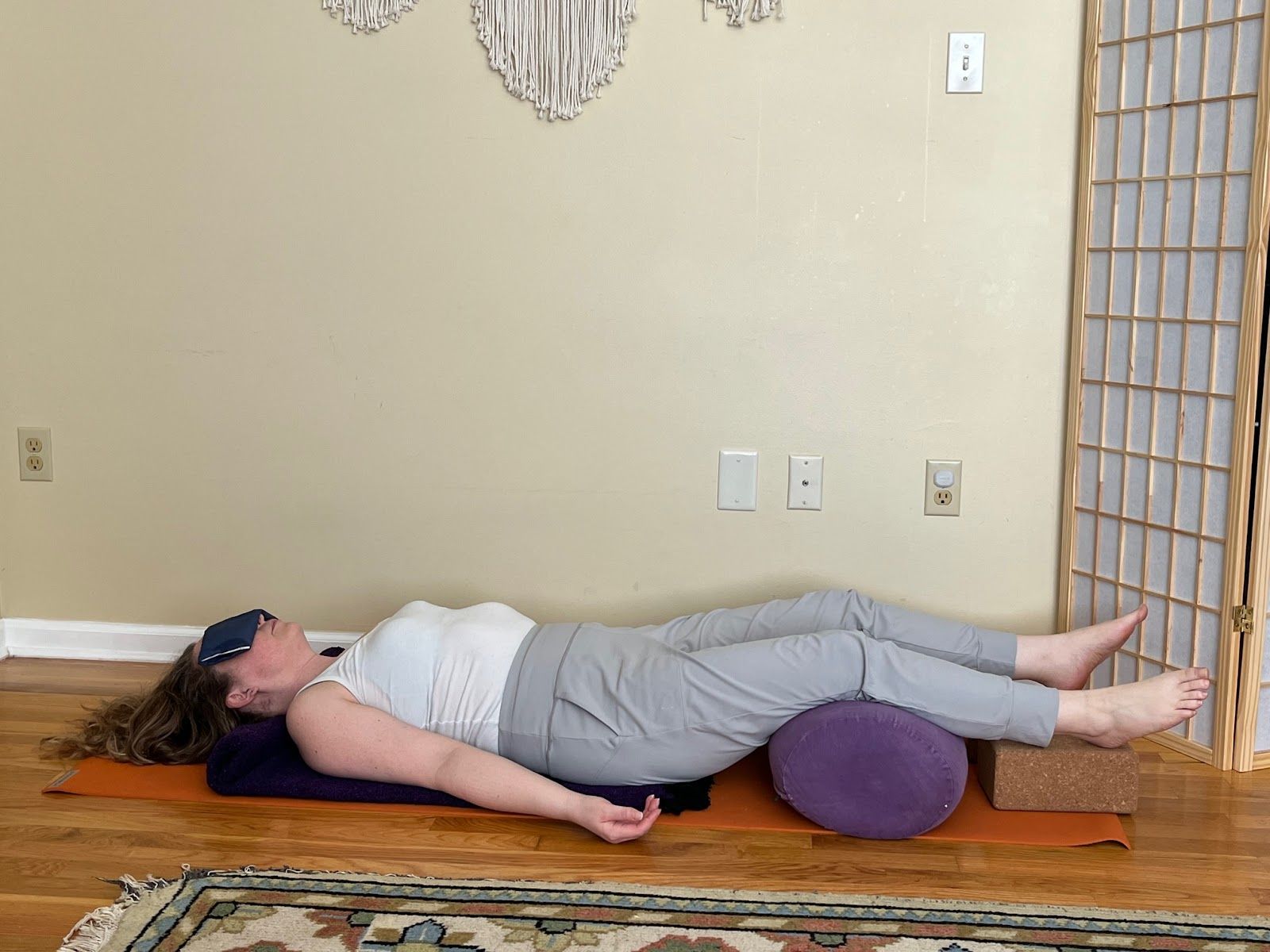
Set a timer for yourself of at least 10 minutes but even better is 20-30 minutes. Every minute you can breathe and allow the space for your healing, is a minute of beneficial progress. Try to stay awake and consciously participate in allowing relaxation in your body. If your mind wanders, just lovingly direct it back to focusing on the rise and fall of your breath.
Remind yourself of your strengths. You are enough as you are and everything necessary for your healing and continued growth is already within. Beaming light to you. Practice with absolute love, yogis.
journal prompt:
how do I feel before and after a restorative yoga session? what moments stood out to me the most?
For grounding sequence inspiration, read Self Love in Yoga.
To learn more about the process of grounding, read Grounding Benefits to Your Overall Health.
Amber Connors | FEB 19, 2024
Share this blog post

Amber Connors, Yoga + Lifestyle
 OfferingTree